The question I’ve been asked repeatedly over the past week is a simple one, and an enormous one: Will the Iranian regime fall?
I don’t think it’s a question that can be answered with certainty yet. But I do think we are past pretending this is just another protest cycle.
The current blackout in Iran began on January 8, hours after Reza Pahlavi called on people to take to the streets at 8 p.m. local time. Mobile networks slowed, then collapsed. Internet access vanished. Even landlines went dead. The regime moved quickly to seal the country off from itself — and from the outside world.
It didn’t succeed.
Despite the shutdown, Iranians have continued to get information out via satellite connections, particularly Starlink. Through those channels, a picture has emerged that looks very different from what state television is showing.
That is why I sat down for a full interview with journalist Ali Hamedani, who has been in direct contact with people inside Iran via Starlink. What he describes is not a fragmented uprising or a Tehran-centric moment, but something far broader.
According to Ali, protests began not in the capital, but in smaller towns across the country — places so obscure that even people in Tehran hadn’t heard of some of them. That reversal alone matters. It suggests this is not an elite or cosmopolitan movement, but a national one.
He relays accounts from cities rarely associated with unrest: Kerman, Zarand, Jiroft, Yazd, Mashhad, Shiraz, Rasht, Chaboksar. In Kerman, protesters reportedly set fire to a statue of Qasem Soleimani. At least 14 people were killed in one night there, according to sources who spoke to doctors. The next evening, people returned to the streets anyway.
Ali also describes something striking in the footage coming out: clarity. High-resolution video. Stable images. Fireworks, music, dancing. One citizen journalist described it as “partying for freedom.”
I spoke about this on Times Radio Breakfast, where I was asked whether the regime was merely wobbling.
“I think we’re past that, frankly,” I said on air. “I think this is actually the end of the Islamic Republic of Iran. The question now is what it evolves into.”
What makes this moment different is not just scale, but intent. In previous uprisings, Iranians demanded specific reforms: free elections in 2009, an end to compulsory hijab in 2022. This time, people are not negotiating.
As I said on the programme, “The people aren’t demanding anything like free and fair elections or the end of compulsory hijab. This time they’re just done.”
Part of that has gone underreported. In the lead-up to these protests, many areas of Iran had no electricity and no water. For an oil-rich country, that is a profound failure — and one that has stripped the regime of credibility economically as well as politically.
I was also asked about foreign involvement. Based on conversations with well-placed sources, I said that Israeli intelligence activity is widely believed to be present on the ground. Whether overt support helps or hinders protesters is still debated among Iranians themselves. But the overwhelming sentiment I hear is clear: people want the regime gone.
Both conversations — with Ali Hamedani and on Times Radio — point to the same conclusion. Even if the Islamic Republic survives this moment, it cannot govern as it has before. Something fundamental has broken.
This article is an invitation to listen for yourself.
Listen to my full interview with Ali Hamedani, who is speaking to Iranians risking everything to be heard via Starlink. And listen to my Times Radio Breakfast interview, where I lay out why I believe we are witnessing not a wobble, but the end of an era.
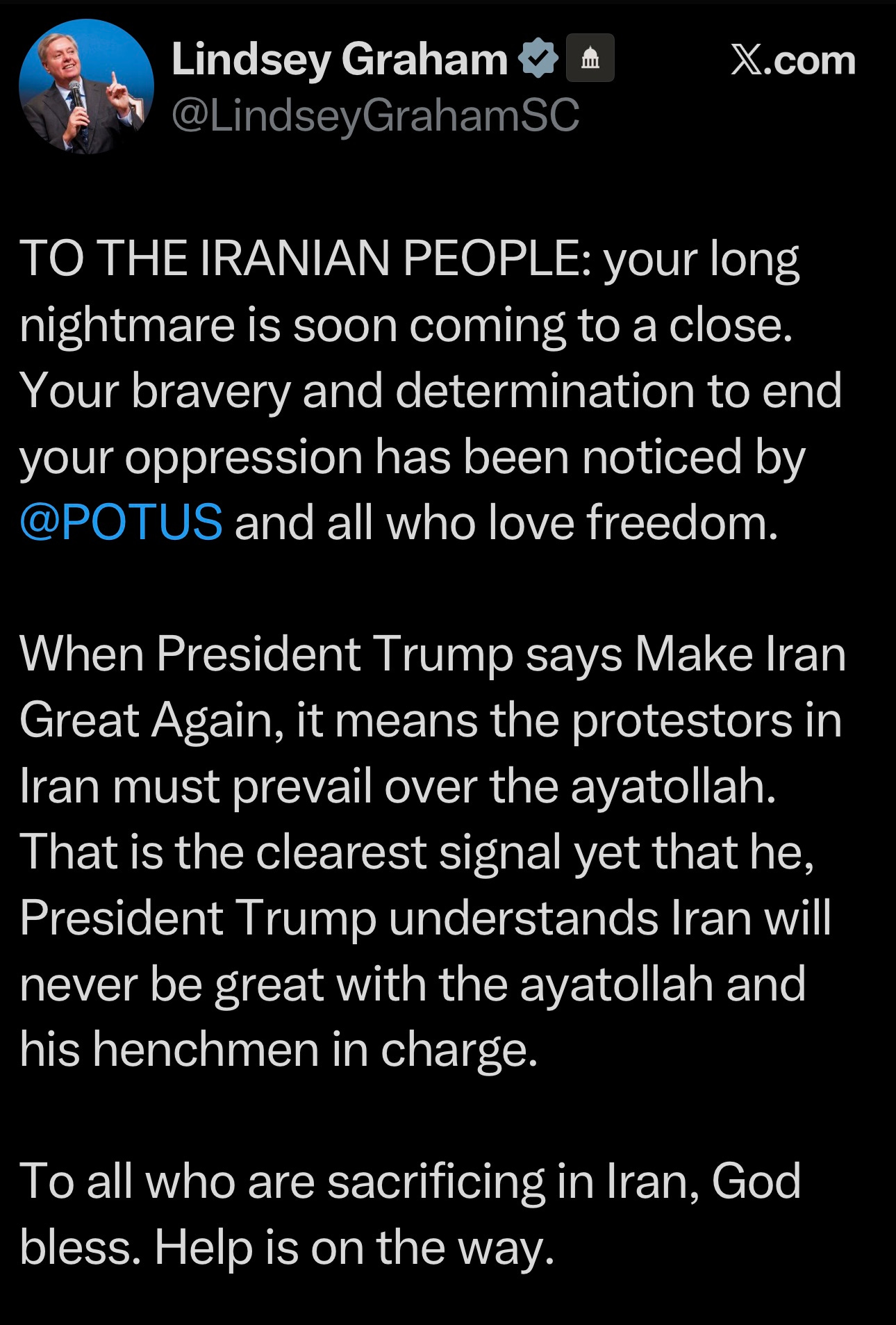
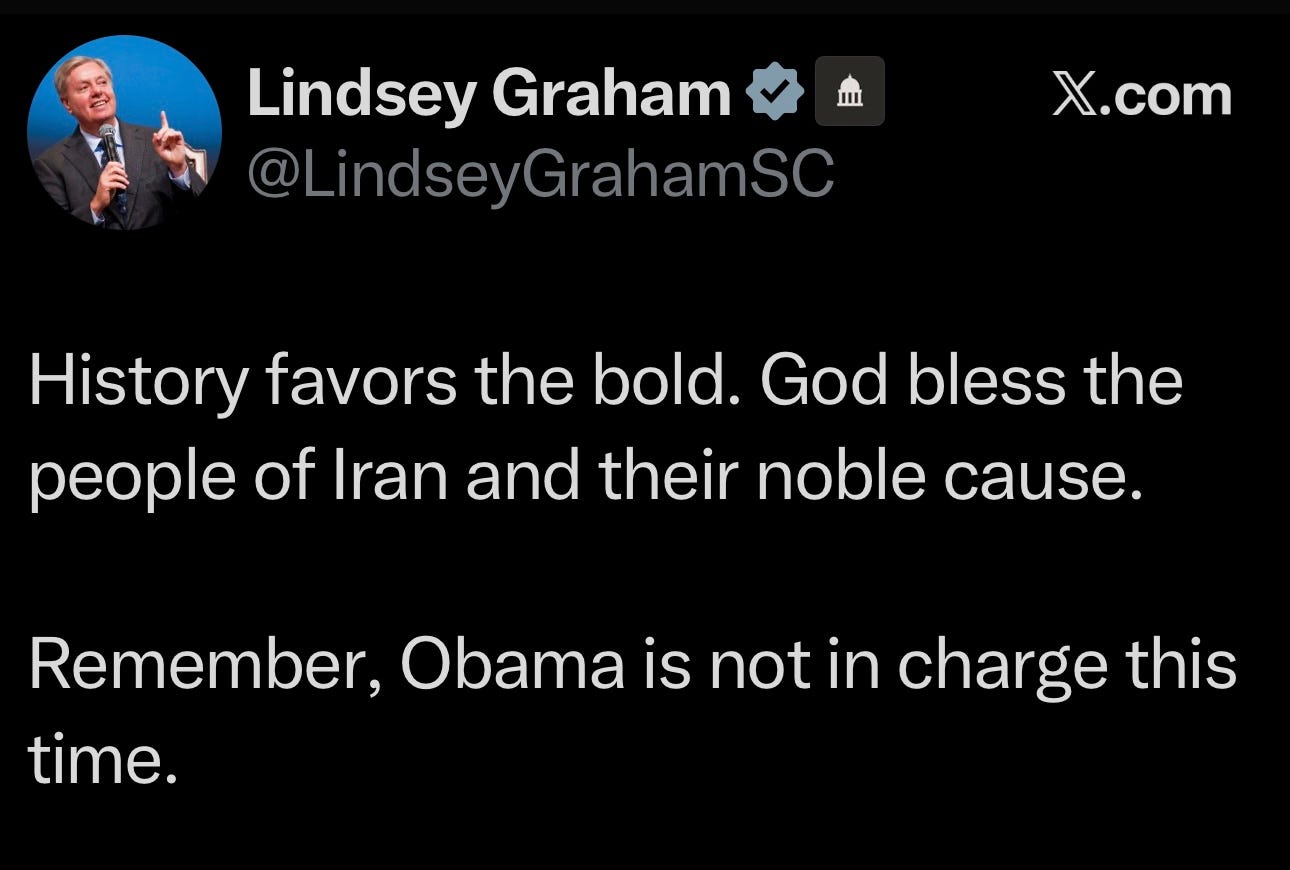
Will America help this time?